.
The nitric oxide (NO) produced by the nitrate reductase activated by AgCelence® has a further important effect in addition to reducing ethylene-induced stress.

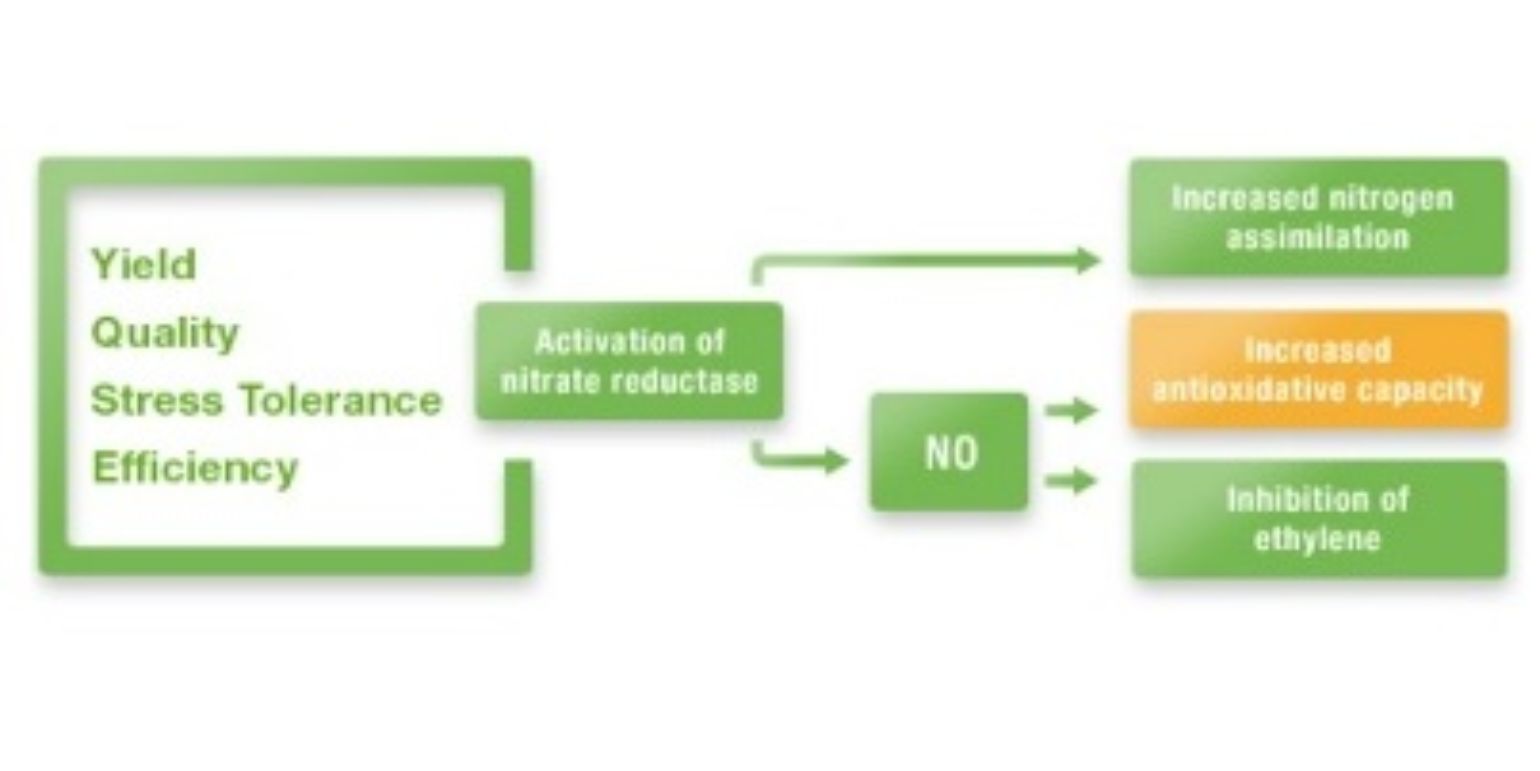
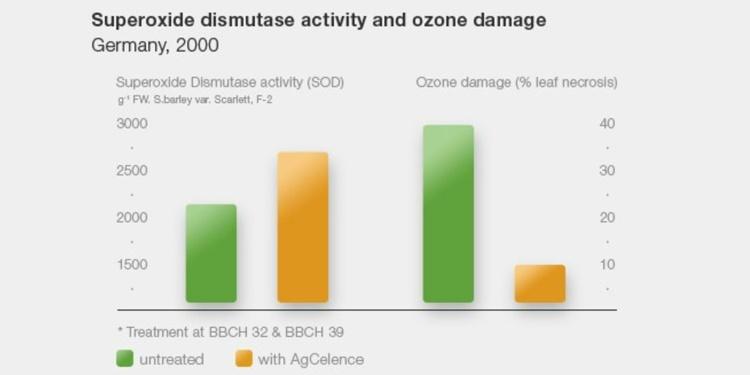
Nitric oxide can release antioxidative enzymes which mop up dangerous free radicals.
Plants produce free radicals in response to dangerous external influences, for example after injury or exposure to strong UV radiation.
This is known as ozone damage and has been particularly well researched.
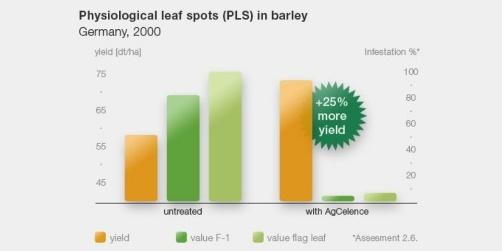
Continuous exposure to hot sunshine is yet another stress factor that can be successfully relieved through the use of AgCelence® products. Cereals, particularly some barley varieties, react to these conditions by developing a scorching condition known as physiological leaf spot (PLS), which leads to necrosis of leaf tissue and very high yield losses.
AgCelence® treatment can reduce the percentage of leaf necrosis by as much as 25%.
The AgCelence® benefit stimulates activity of an antioxidative enzyme called SOD (superoxide dismutase) which acts like a sunscreen and effectively stops the development of physiological leaf spot.
This is another factor that prolongs the green growing period for cereals and ensures that plants keep on filling grain, even under extreme heat stress.
How does this benefit the grower? You can choose the highest yielding cereals, even knowing that they are susceptible to PLS.
With the help of AgCelence® products, growers can be confident that their investment and hard work will be repaid with a crop that returns a high yield despite sunshine stress.