.
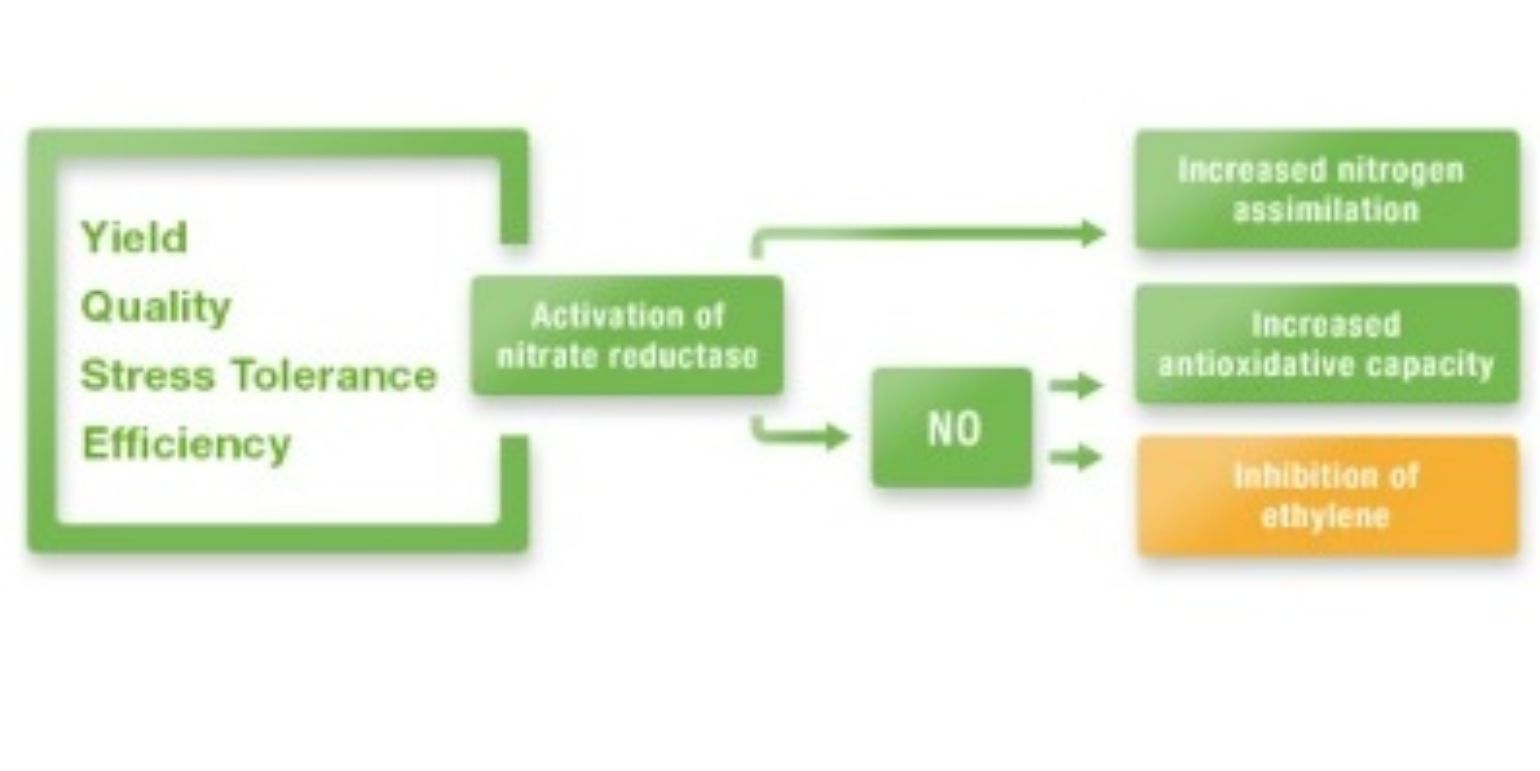
Nitrate reductase, which has already been mentioned, releases nitrogen oxide (NO) in the plant cells which in turn triggers further important processes, such as the inhibition of ethylene synthesis.


Ethylene is a hormone that plants produce in response to stress. Plants also produce ethylene in response to injury, when they mature, prior to leaf, flower or pod loss and before pathogen-triggered cell death. Plants sacrifice important contributors to yield such as leaves, flowers or pods in an attempt to reduce the effects of stress. Reducing ethylene production is a means of limiting this natural response. AgCelence® products based on F500 cause plants to show fewer stress symptoms. This means that during the stress phase they produce less ethylene.
It is unimportant what kind of stress the plants are exposed to. However, a lot of research has been carried out into drought stress, which is an increasing problem in many regions and can cause significant yield losses.
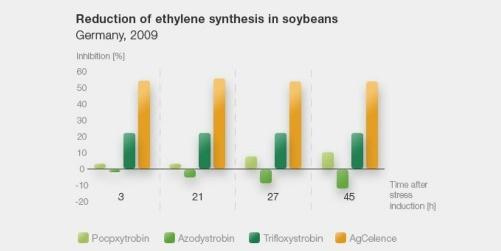
Better stress tolerance through the use of AgCelence® products can be measured by observing the reduced level of plant ethylene production. The graph shows the vastly superior effect of AgCelence® products applied to soybeans.
What does this mean for growers? It gives them more confidence to hit yield targets, and a certain degree of independence from climatic influences on crop performance. In short, the AgCelence® benefits offer more reliable returns in terms of yield and quality.
The ability of plants treated with AgCelence® products to better withstand drought stress has been particularly well researched.
Crop tolerance to drought
Plants under drought stress produce more ethylene. This triggers senescence (aging). Leaves begin to wilt and die. The loss of green leaves limits the plant’s ability to photosynthesise sufficiently and consequently to maximise yield potential.
The illustration below indicates the efficacy of AgCelence® products when applied to drought-affected corn. Leaf dieback is greatly reduced in crops treated with AgCelence® products. The resultant yield was 23% higher.
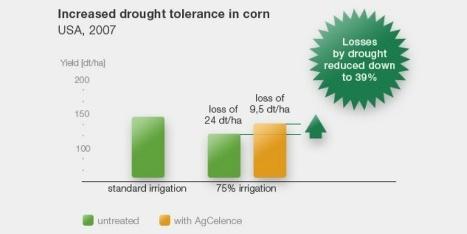
Where crops are treated with AgCelence® products and then subject to stress:
- Emissions of ethylene are reduced
- Stomata management is influenced to maintain photosynthesis to a certain extent
- Plant growth may be reduced, but still continues
- Premature ripening is less likely to occur
- The crop withstands stress much better, with higher yield and improved crop quality than would otherwise be the case
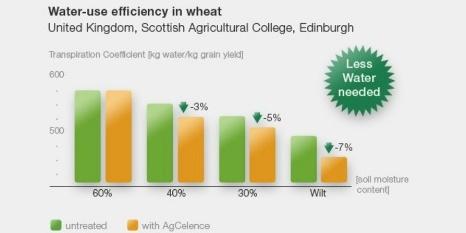
The graph shows results from crops treated with AgCelence® products under dry conditions compared with untreated crops.
The AgCelence® benefit here gives a consistent advantage in terms of yield – even where moisture availability is just 50% of the recommended standard.
Wheat treated with AgCelence®
products continues to grow even under drought stress. The graph shows results from BASF trials where the cereal crop treated with AgCelence® products consistently produced more grain with less water. The amount of water needed to produce 1 kg grain decreases as soil moisture content drops.
Naturally, the AgCelence® benefit cannot help when there’s more or less no moisture available for the crop. But in cases where the plant would survive, but with critically depleted yields, AgCelence® products offer significant help in reducing stress and increasing yield compared with what might have been.
Greening effect
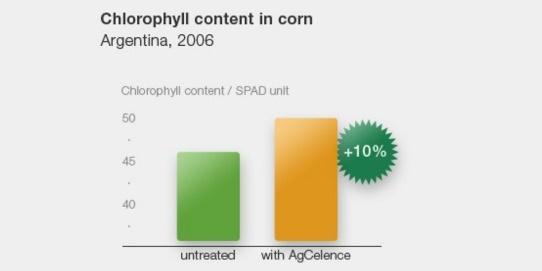
The improved stress tolerance is resulted in a greening effect that has been documented in numerous trials. Under stress conditions, the plants continue to photosynthesise and grow, thanks to reduced plant ethylene production. This is also evidence of AgCelence®-induced stomata management.